
He stops for you.

You may know that I am not only a writer but a schoolteacher, which means I don’t teach children during the months of June or July or August. I enter slower rhythms during summer months when school is not in session. And last June as this summer-time Sabbath began, I sensed the Spirit whisper: I want you, he urged me, to seek me and to find me and to know me.
I didn’t know how to seek him and find him and know him necessarily. But as I settled under the trees of my backyard with Bible in hand each morning, I felt led to the gospels. I read Matthew and Mark and Luke, and I loved John most of all because his words felt like those written by a wise but so-gentle grandfather. The Spirit’s message of seeking him and finding and knowing him in the gospels grew increasingly unmistakable, too. I would try to read the book of Acts and Paul’s letters and something didn’t feel quite right. I knew I needed to seek Jesus and to find him and know him in Matthew and Mark and Luke and John.
And as the summer months grew deeper and my body slowed and I found myself more attentive to the whispers of the Spirit, my soul was drawn to those moments in the gospels where Jesus reveals the good news of his kingdom through compassionate encounters of healing and restoring and transforming.
Zechariah, the father of John the Baptist, hinted of Jesus’s compassionate encounters to come. Zechariah prophesied through the power of the Holy Spirit, “Praise be to the Lord, the God of Israel, because he has come to his people and redeemed them” (Luke 1:67-68).
Know me, the Spirit nudged as I read about the redeemed lives in the gospels of which Zechariah prophesied. This is me. This is who I am.
What follows are reflections of one such restored life. I hope it will give you, too, some soul sustenance.
Blind Bartimaeus
First, from the gospel of Matthew:
As Jesus and his disciples were leaving Jericho, a large crowd followed him. Two blind men were sitting by the roadside, and when they heard that Jesus was going by, they shouted, “Lord, Son of David, have mercy on us!” The crowd rebuked them and told them to be quiet, but they shouted all the louder, “Lord, Son of David, have mercy on us!” Jesus stopped and called them, “What do you want me to do for you?” he asked. “Lord,” they answered, “we want our sight.” Jesus had compassion on them and touched their eyes. Immediately they received their sight and followed him. (Matthew 20:29-34)
Then Mark, a second gospel author, adds a few more details about this same account with the blind men. Mark says one of the men is named Bartimaeus and in addition to being blind he is also a beggar. Bartimaeus is not only disabled but destitute.
So I sat in my backyard as I read Matthew and Mark’s accounts of men in need of physical mercy and tried to picture ancient Jericho. Here’s a current day image of the city from Google:
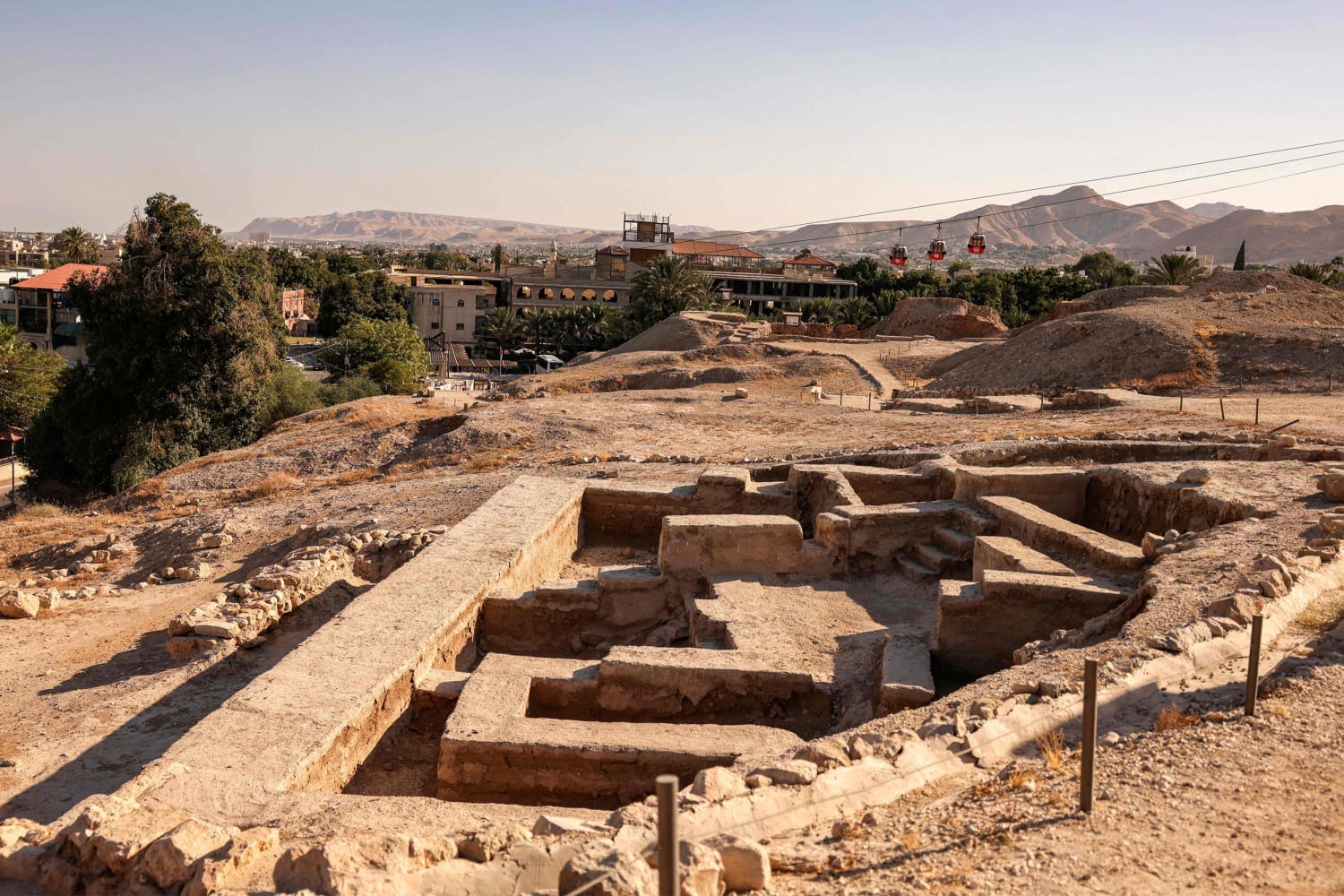
I wonder if on this day as the blind men called to Jesus if the city was dusty and hot like it looks here. Matthew says the crowd was unwelcoming to these men and I wonder if they were not just quieted but quieted in a moment that might have been very deeply important to them. Jesus doesn't appear to know them. They presumably have no social standing, no influence, no obvious way to repay him for his mercy. They are blind, poor, and overlooked.
I try still to understand blindness impairment and its implications both socially and culturally, today and on that day in Jericho. Blindness, like all disabilities, creates barriers that prohibit full inclusion in all sorts of ways. Here is a cruel barrier: the crowd seems to believe a disabled, destitute beggar isn’t worthy of Jesus’ attention.
I imagine some people that day — and any day — just ignoring the men completely which maybe is worse than demanding they be quiet? To be ignored? The crowd’s responses had to be degrading and dehumanizing. The message would maybe pierce: “You are not important enough for him,” is what they may have received. The two men may have been humiliated and ashamed, but they called louder to him.
And then what does Jesus do as he is on his way to Jerusalem where he knew he would spend the last week of his human life? (It’s not as if he was running errands or visiting friends or tidying house or whatever one did before one traveled to another city in the first century. He had something important to do, you know?) Jesus hears them. He hears the ones that the crowd is telling to be quiet. He hears the ones who others considered unimportant or at least not-important-enough for him. He hears the ones the crowd is rebuking and the ones who ask him for mercy.
“What do you want me to do for you?” he asked the blind men.
Yet Jesus hearing them didn’t mean just hearing them. It meant stopping for them. And then he touches the blind men. He restores their sight. And then they get up and want to follow him. Of course they want to follow him. What else would matter than being with the One who out of his mercy and goodness stopped for you? Who loved you when everyone else overlooked you and told you to be quiet?
Psychologist and author Diane Langberg says when we stop for another human being, when we listen, when we enter in and are patient, it says to that person, “You are worth my time. You are worth being known. You matter.”
That’s what Jesus did for these two men. He gave them worth and dignity and the gift of being seen before he healed their disability. He showed them they matter whether he granted physical healing or not.
You are the blind man.
And then I remembered my own body as I was transfixed by his mercy here, and the Spirit in his kindness nudged me: Laura, he whispered, you are the blind man. I stop for you, too.
I don't mean that I share these men's social or physical circumstances. I don't. Yet through their story, Jesus speaks into pain: I see your brokenness and shame and where you need my deepest healing and redemption. I stop for you, I stop for you, I stop for you.
My point is not about blindness, though the men’s ability to see after Jesus touched them is miraculous. My point is this: Jesus stopped for people all over the gospels. He came to his people and redeemed them” (Luke 1:67-68). He stopped for prostitutes and Pharisees and sick women and paralyzed men and for children. He stopped for the poor and for the rich and for the Roman Empire’s soldiers.
This is who he is. He stops. And he stops for all of us.
He stops for you.
He stops for you no matter what you’ve done, no matter who you are, no matter if you think you deserve his mercy or don’t deserve his mercy. He stops for the beggar and for all of us teachers, professors, pastors, musicians, students, real-estate agents, nurses, those of us unemployed.
He stops.
Later this week I’ll share a modern story of stopping-for-people. For those of us who follow Jesus, we are called to be like him; to stop. (Subscribe below.)
But for today, let the blind men’s encounter settle over you. May Jesus tell you now, wherever you are: I stop for you, too.
Because he does.